
AI and IVF: How Intelligent Technologies Are Transforming the Future of Fertility Care

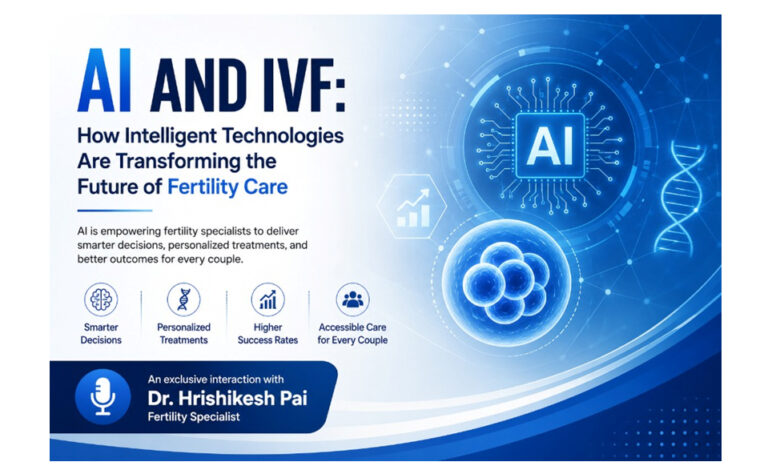
Artificial Intelligence is ushering in a new era of reproductive medicine, making fertility treatments more precise, personalized, and accessible than ever before. From improving embryo selection and optimizing IVF protocols to enabling data-driven clinical decisions, AI is redefining how fertility specialists approach patient care. While technology continues to enhance success rates and streamline treatment journeys, the expertise of clinicians remains at the heart of every decision.
In this exclusive interaction, Dr. Hrishikesh Pai, one of India’s leading fertility specialists, shares how AI is revolutionizing IVF, advancing personalized reproductive care, expanding access to fertility services across the country, and shaping the future of reproductive medicine over the next decade.
Q. Dr. Hrishikesh Pai, AI is rapidly transforming healthcare. How do you see it reshaping fertility treatments and IVF success rates in the coming years?
Artificial Intelligence is set to become one of the most significant advancements in reproductive medicine. In IVF, AI can analyze thousands of clinical data points from embryo development and sperm quality to patient history and hormonal profiles to support more informed clinical decisions. This can improve embryo selection, optimize treatment protocols, and reduce variability in outcomes. While AI is not a replacement for medical expertise, it is a powerful decision-support tool that has the potential to improve IVF success rates, minimize unsuccessful cycles, and enhance the overall patient experience.
Q. Dr. Hrishikesh Pai, can AI help create more personalized fertility treatment plans based on a patient’s medical history and reproductive health?
Answer: Absolutely. Every fertility journey is unique, and AI enables us to move closer to truly personalized reproductive care. By evaluating factors such as age, ovarian reserve, hormone levels, previous IVF outcomes, genetic information, and lifestyle parameters, AI can identify patterns that may not be immediately apparent. This allows clinicians to tailor stimulation protocols, medication dosages, and embryo transfer strategies for each patient. Personalized treatment not only improves the likelihood of success but also helps reduce physical, emotional, and financial burdens on couples.
Q. Dr. Hrishikesh Pai, how do you balance AI-driven insights with the clinical expertise of fertility specialists and embryologists?
Answer AI should always complement not replace the experience and judgment of fertility specialists and embryologists. Clinical decisions involve several factors that extend beyond data, including patient preferences, medical complexities, and ethical considerations. AI provides valuable insights by identifying trends and predicting outcomes, but the final treatment plan must always be guided by an experienced clinician. The most effective approach is a collaborative model where advanced technology enhances precision while human expertise ensures compassionate and individualized care.
Q. Dr. Hrishikesh Pai, what role will AI play in making advanced fertility care more accessible across India?
Answer AI has the potential to bridge significant gaps in access to fertility care, particularly in Tier II and Tier III cities. Through AI-enabled diagnostics, telemedicine, remote monitoring, and standardized clinical decision support, patients can receive high-quality guidance without always needing to travel to metropolitan centers. AI can also improve operational efficiency, helping fertility clinics optimize resources and reduce treatment timelines. As digital healthcare infrastructure expands, AI will play a key role in democratizing access to advanced reproductive care across India.
Q. Dr. Hrishikesh Pai, what emerging technologies do you believe will have the biggest impact on reproductive medicine over the next decade?
Answer The next decade will witness the convergence of Artificial Intelligence, advanced genetic testing, time-lapse embryo imaging, automation in embryology laboratories, and precision medicine. AI-powered embryo assessment and predictive analytics will continue to improve treatment accuracy, while innovations in genomics will enable better identification of hereditary conditions and embryo viability. Wearable health technologies and digital fertility monitoring will further enhance patient engagement and early intervention. Together, these innovations will make fertility treatments safer, more precise, and increasingly personalized, ultimately improving outcomes while making reproductive healthcare more patient-centric.