
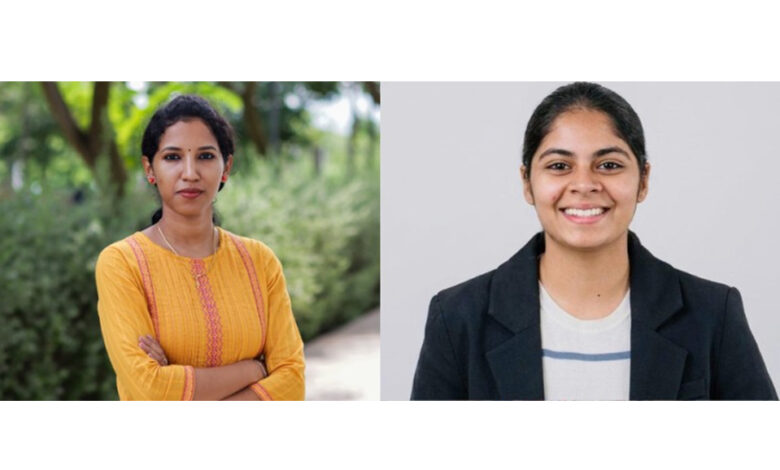
Priyanka Rao (Research Scholar) & Dr Aswathy Gopi (Assistant Professor)
Department of Psychology, SRM University-AP
The number in the press release of September at the India facility of St. Jude’s should be understood as a behavioral science finding rather than a health statistic. The percentage of the kids abandoning treatment fell from over 30 percent to below 5 percent, but it had nothing to do with a drug, a protocol, or surgical expertise. It was where the family lived while getting treatment.
Approximately 50,000 children in India are affected by cancer annually. The specialization of pediatric oncology is limited to a few large cities, which compels more than 32,000 poor families to travel annually with their sick kids. For those that can afford it, they stay in cheap hotels till their money is depleted, while others spend the nights at railway stations or on the pavements in front of the hospital. The sickest children in the country with their heads merely a few meters away from where they are supposed to be saved.
The story behind this issue lies in the medical field of pneumonia and tuberculosis. The difficult part about it is telling the psychological one, which in its own way is even more important, sleeping on the pavement doesn’t only harm a child physically but also damages their parents psychologically.
The tax nobody pays
In 2013, Sendhil Mullainathan, an economist, and Eldar Shafir, a psychologist, performed an experiment on sugarcane farmers in Tamil Nadu two times – first prior to harvest, when they were poor, and second, after harvest when they were paid. The same men. The same tests. The same farms. After being paid, their test results showed much improvement, being poor made you feel like you lost a whole night’s sleep.
The concept has gained much traction in modern-day psychology, scarcity doesn’t only drain your wallet. It eats up your working memory as a background task that cannot be stopped. When faced with scarcity, people’s minds concentrate only on the immediate danger and lose awareness of anything nearby.
Now map onto a man who comes from a village in Bihar, accompanied by his seven-year-old son who may be under remission or not, to a railway station in Mumbai. All he has in his pockets is ₹4,000 cash, doesn’t know Marathi language, a non-refundable return ticket and an appointment in eleven days. Ask him to project himself eleven days into the future. He cannot. Not because he cares any less about his child than a rich person does, but because his mind is occupied with the question of where the boy will sleep tonight? and whether the water is safe? The decision to discontinue treatment has nothing to do with morality, it has everything to do with making a personal plan for the next eleven days amid pressing concerns. Offering a home to the family doesn’t solve the problem of cancer. But it helps free up the brainpower needed to get through a two-year regimen and that’s what allows the reduction from 30% of abandonments to less than 5%.
The concept of a secure base, proposed by Bowlby, extends beyond the house and into the streets. In addition to that, there exists another plane of psychology at play. This is the child’s consciousness. The basis of attachment concept by John Bowlby is the simple but powerful notion of the so-called secure base. Children become less afraid and more capable of handling stress if they have something solid to return to afterwards. Exploring and returning make up one circuit, when the returning is broken, the fear has nowhere to discharge.
Cancer treatment for a child is a series of betrayals committed by adults, which include such things as injections by happy faces, medicine that burns like poison, baldness, disobedient body. It is possible to survive all of this because of the return bed, ceiling, and the face of parents at 9 pm, which does not look horrified.
A railway platform provides none of the three. First of all, the ceiling differs, the face of parents is terrified because the parents do not have a home anymore. Plus, the child, which recognizes the slightest hints of adults much better than adults recognize, learns the toughest thing possible, the adults are helpless too.
In 2016, Martin Seligman and Steven Maier, a neuroscientist, interpreted the initial learned-helplessness experiments in reverse order. Instead of passiveness in times of hardship being a result of choosing to learn it, this is a default reaction of mammals. What needs to be learned with effort and practice is the belief that one’s action matters.
A locked room teaches this lesson every night. Streets teach just the opposite each night, teaching it to a child whose brain gets influenced by chemotherapy.
The physics of very small doors.
In 1965, Howard Leventhal conducted an experiment at Yale in which students received information about tetanus and the need to vaccinate themselves. Frightening messages had virtually no effect. About 3 percent of the population appeared. Scientists decided to add a seemingly insignificant element, a map of the university and working hours of the clinic. The vaccination rate rose to 28 percent.
According to Kurt Lewin, such minor elements of the situation are called “channel factors”, small factors that make-or-break behavioral options regardless of their size. For example, a map, a form filled out in advance, a bed ready for the person.
The Indian public health system has been struggling for decades to regulate drug prices, the number of oncologists, and diagnostic delays. St. Judes is quietly running a different experiment, leaving the drugs unchanged and eliminate barriers. Accessible and hygienic housing nearby, transportation, dietary advice, counseling, education, and infection prevention are not cancer therapy, but everything necessary to ensure that the patient completes treatment and doesn’t disappear to the districts in month four.
The charity currently operates 876 patients in 13 cities, including a program of support for more than 2,000 survivors.
What the number is actually saying
Health policy in India continues to view patients in terms of a body that visits hospitals. However, the 30-to-5 hypothesis suggests an alternative approach here, a patient represents the nervous system of the entire household, and completing a two-year therapy is contingent on factors not listed in a medical record, such as sleep, security, the harshness of the city environment, and respectability at 9 pm.
If you construct a cancer wing without increasing the capacity of those responsible for bringing the patient in, a third of them will break down—no matter how much they care about the child—as chronic stress makes their mind incapable of making future-oriented decisions.
An unexpected facilitator of pediatric cancer care in India may turn out to be a room.